
Keyword cannibalization is usually described as a mild inefficiency — two pages splitting the same traffic, a little lost momentum, nothing that warrants an emergency. That description does not survive contact with a local business that has built a page for every city it serves. On a home service site, cannibalization does not just split traffic. It can pull a company off the map across an entire service area, and it does it without any warning from Google.
That is what happened to a home service company we recently worked with. The business had been ranking well. Then its Google Maps visibility collapsed almost everywhere except the block its own building sits on.
An algorithmic hit arrives with no notification attached
There is no message in Search Console for this. Nobody gets an email. A manual action shows up with a name and a reason attached; an algorithmic devaluation just shows up as a number that used to be a three and is now a nine.
Here is the ranking grid for a core keyword on August 6. The green pin at the centre is the business location, sitting at first position. Everywhere else, the company had been pushed down to positions five through ten — outside the map pack for the majority of people searching in its own service area.
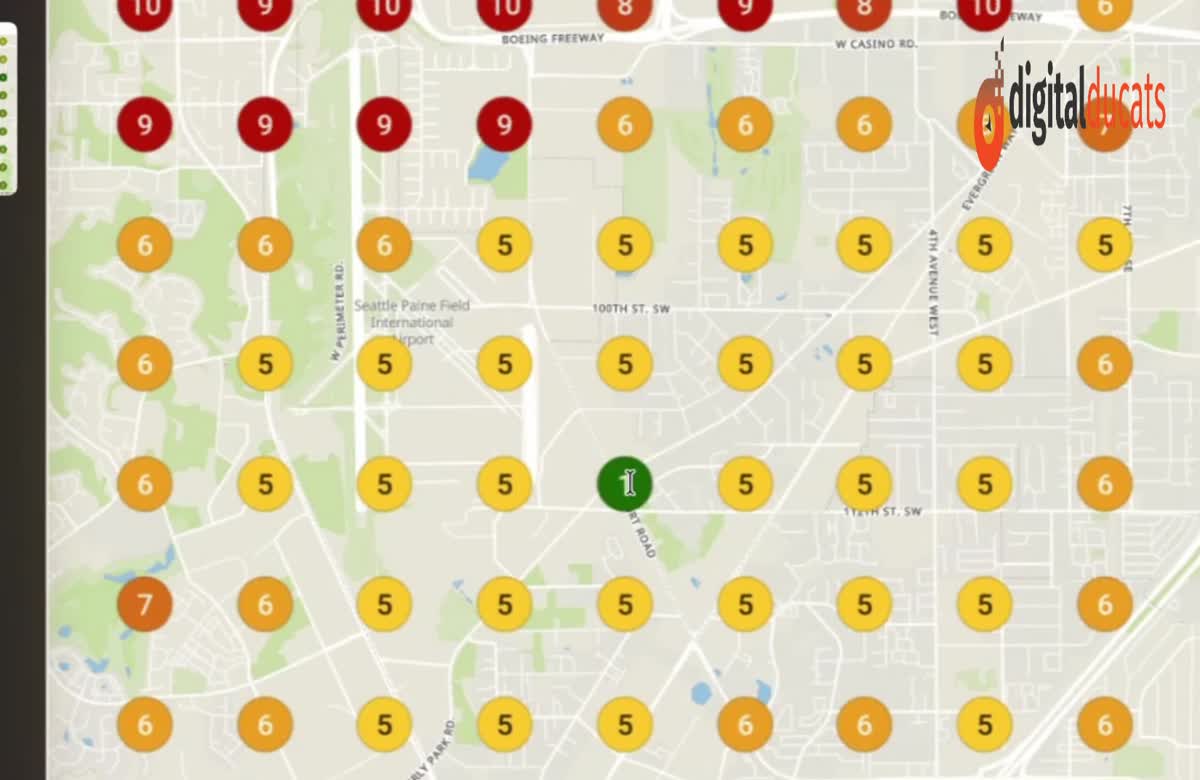
The company had not lost its reviews. It had not lost its Google Business Profile. It had not been hit with a spam action. What it had was a website that had grown into a structure Google could no longer read cleanly.
A page for every city stops working somewhere around page twelve
The instinct behind location pages is sound. If you serve fifteen municipalities, it seems obvious that you should have fifteen pages, each one naming a city, each one available to rank locally. Plenty of agencies still sell exactly this as local SEO.
It works right up until the pages stop being meaningfully different from one another. And they almost always stop being meaningfully different, because there is only so much you can say about the same service in fifteen neighbouring towns before you are publishing the same page with the city name swapped out. At that point Google has fifteen candidates for one query and no strong reason to prefer any of them. It does not reward the effort. It picks one, or it discounts the group, and the rankings that used to belong to the strongest page get scattered across a set of weak ones.
The failure mode is quiet. Rankings do not vanish overnight, they erode — and because they erode across a wide geographic footprint at once, the owner experiences it as “the phone stopped ringing” rather than “our site has a structural problem.”
The service pages were competing with each other too
Location pages were only half of it. This site also had service pages built up over several years, added one at a time, each targeting a term that sounded distinct in a planning document and was functionally identical in a search result.
That is the part that catches most home service companies. A repair page, a service page and an emergency page can look like three separate offerings internally while representing one search intent externally. Google resolves that ambiguity by choosing, and every time it chooses, the pages that lost are still sitting on the site, still internally linked, still sending signals that dilute the winner.
Multiply that by a location page set covering the same terms in every city, and you have a site where dozens of URLs are all raising a hand for the same query. So the work was not a content refresh. It was consolidation: deciding which page owns which intent, redirecting the ones that no longer had a job, and making sure internal links pointed up toward the page that was supposed to win instead of spreading across the ones that were not.
Six days later
Same keyword, same grid, after the cleanup:
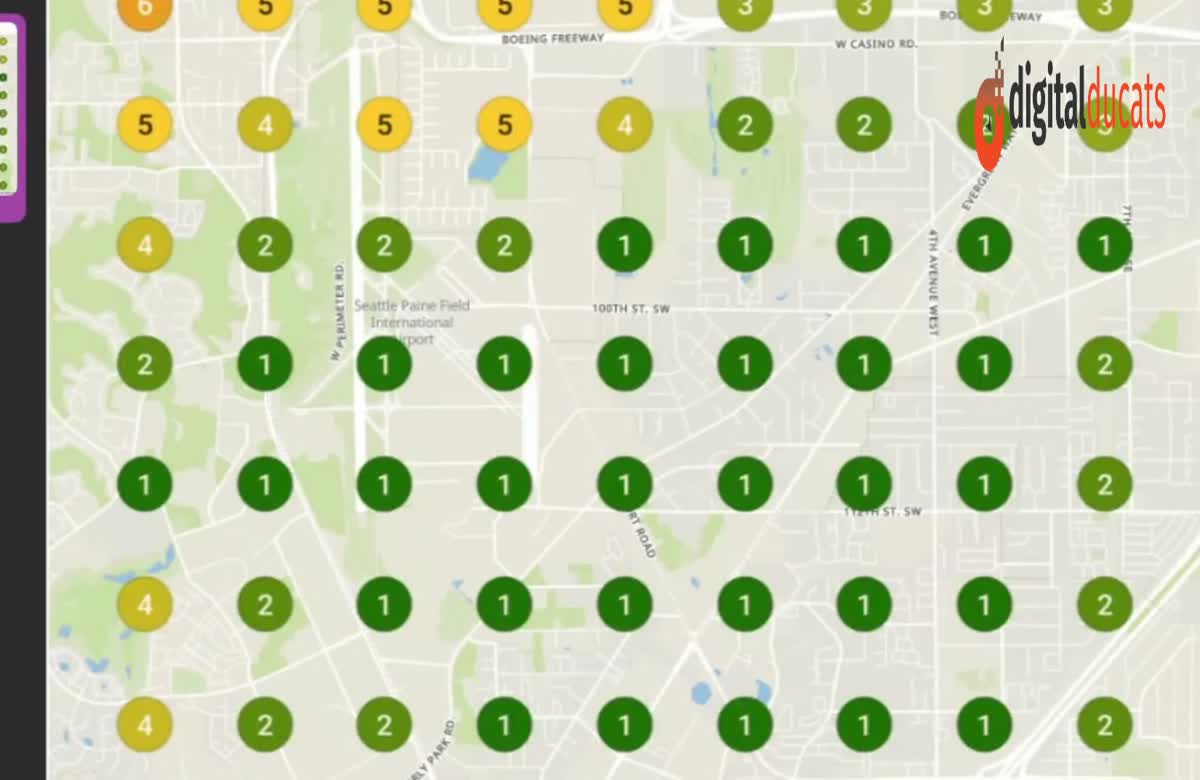
Nearly the whole grid moved into the top three, with most points sitting at first position. As far as a searcher is concerned that is a different business — not because anything about the plumbing changed, but because the site finally gave Google one clear answer per query instead of a dozen competing ones.
A second keyword told the same story from a better starting point. Visibility there had been holding around third across much of the grid, which is the kind of result a business owner is usually told to be satisfied with. After the same structural work, most of that grid moved to first.
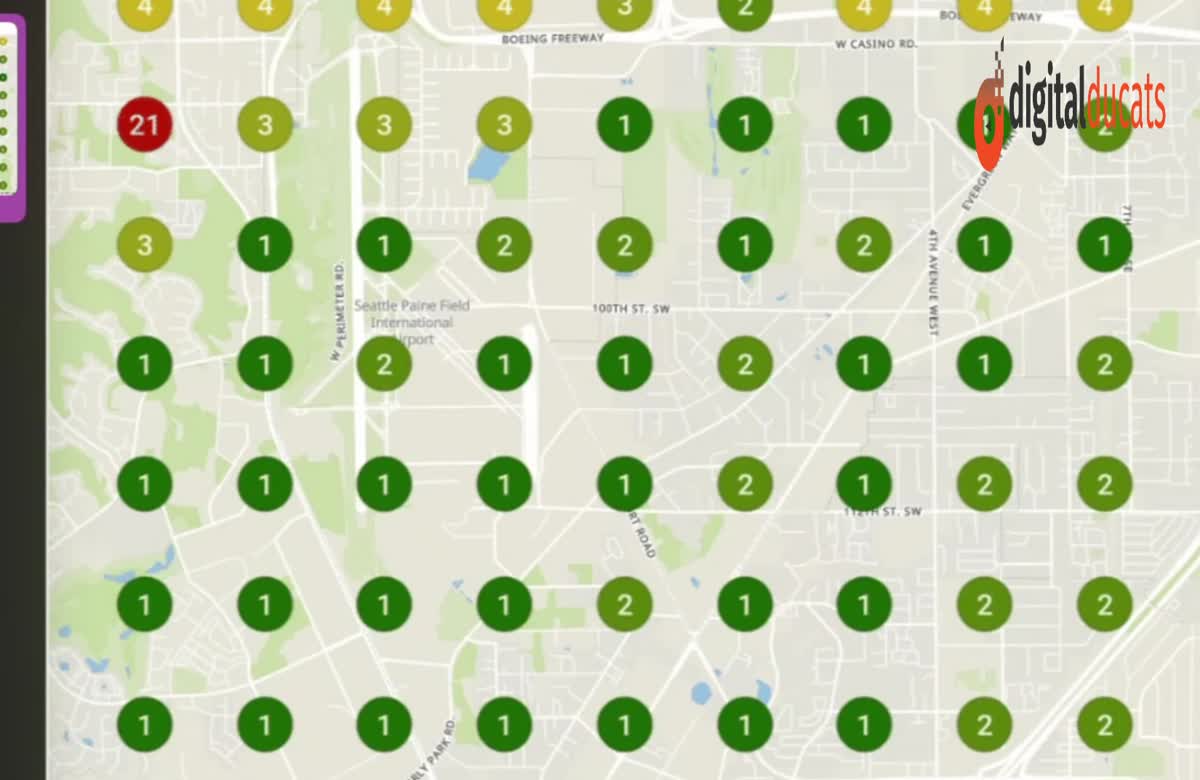
The speed is the part that surprises people, and it is worth being precise about why it happened. Six days is not how long it takes to earn rankings. It is how long it took Google to re-evaluate a site whose authority was already there, and whose only real problem was that the authority was spread across pages fighting each other. Those rankings were not built in a week. They were unblocked in a week.
Why the grid matters more than a position report
A single “you rank #3” number is an average of a lot of different realities. Local rankings shift with the physical location of the person searching, sometimes dramatically within a few kilometres. A business can sit at first position at its own address and be invisible four blocks away, which is precisely what the first scan above shows.
That is why a grid scan is the only honest way to look at local visibility. It shows where a company actually appears rather than where it appears on average, and it makes a structural problem legible in a way a position report never will.
It also reframes what a small move is worth. The gap between first and third in the map pack is not a small difference in clicks — position one takes a large multiple of what position three does, and in a trade where the first company to answer usually gets the job, that gap compounds into booked work rather than impressions.
What to check on your own site
If you have a page for every city you serve and your map visibility has been shrinking, look at the overlap before you look at anything else. Pull your page list and ask which of them would return the same search result if a customer typed them into Google. Any group that answers the same question is a group that needs to become one page.
The same test applies to your services. If two pages would satisfy the same person with the same problem, they are not two pages. They are one page and a redirect.
This is the work behind our local SEO engagements, and the site-wide version of it — consolidation, intent mapping, internal link structure — sits inside our SEO services. If your rankings have been sliding without an obvious cause, the structure of your site is the first place worth looking.